🐔A Complete Guide to Chicken Cage Specifications & Accessories
Choosing the right poultry housing equipment is the single biggest decision for farm productivity. A well-designed chicken cage system doesn’t just house birds — it protects your investment, reduces labor, lowers feed waste, and keeps egg production consistent. In this guide, we break down the core specifications of modern chicken cages and the essential accessories that make a complete, reliable system.
1. Core Cage Specifications
A-Type & H-Type Layer Cages
- A-Type (stair-step): Ideal for medium farms, easy to inspect and clean; rows stacked in steps with natural manure drop.
- H-Type (vertical): High-density, automatic manure belt and feed/egg collection — the standard for large commercial operations. Up to 8 tiers to maximize space per square meter.
Key specifications to check:
| Item | Specification |
|---|---|
| Wire material | Cold-rolled low-carbon steel wire |
| Surface treatment | Hot-dip galvanized (10–15 years life) or electro-galvanized |
| Wire diameter | 2.0–2.5 mm (body), 2.8–3.5 mm (reinforcement) |
| Mesh size | 25×25 mm / 25×50 mm / 30×40 mm |
| Capacity per door | 3–4 birds (layer), 6–8 birds (broiler) |
| Door type | Sliding door or hinged door |
| Frame | Angle iron / square tube, hot-dip galvanized |
Broiler & Pullet Cages follow the same material standards but use larger mesh openings and higher stocking density to suit meat birds and young stock.
2. Essential Accessories
A cage is only as good as its full system. These are the accessories that turn a bare cage into a complete poultry house:
- Drinking System: Stainless steel nipple drinkers (with anti-drip design), drinker cups, PVC water pipes, pressure regulators and filters. 1 nipple per 4–5 birds.
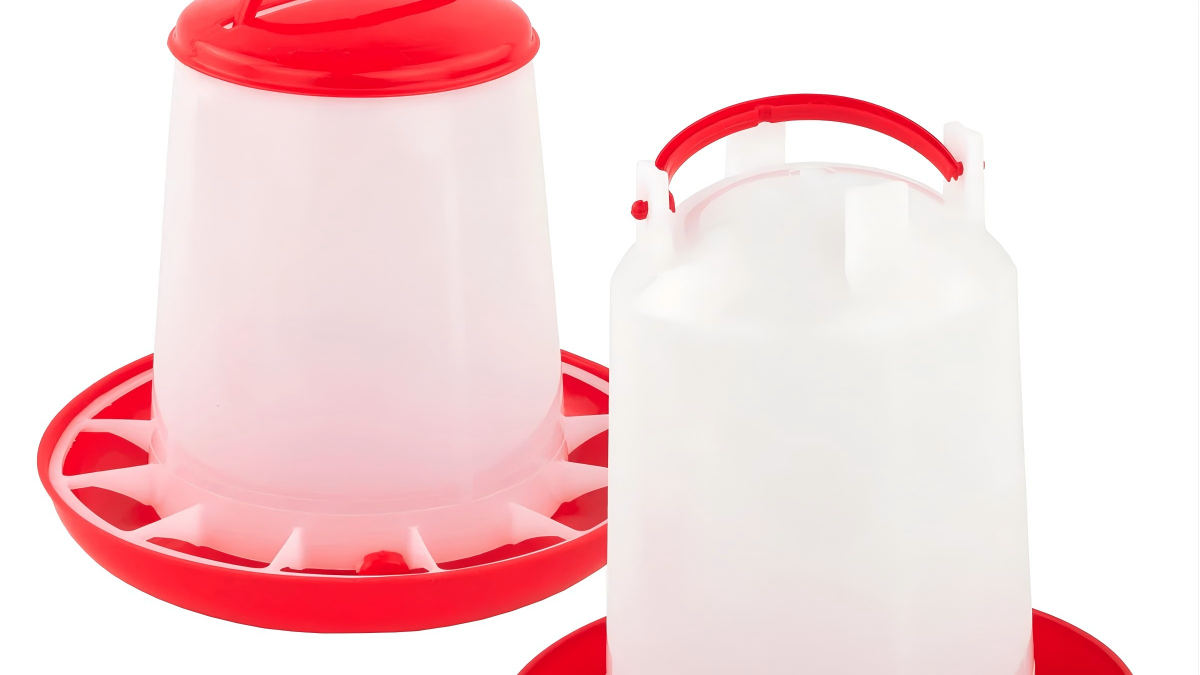
- Feeding System: V-shaped galvanized feed troughs, automatic chain/pan feeders, feed hoppers and silos for uniform distribution and reduced waste.
- Egg Collection: Sloped egg-collection trays (with soft landing pads to reduce breakage), egg belts and an automatic egg collector.
- Manure Removal: Manure board (for A-type) or manure belt + scraper system (for H-type) for clean houses and better air quality.
- Frame & Support: Stands, J-hooks, U-clips, wire mesh flooring and all fixing hardware included with the cage.
- Environmental Control: Ventilation fans, cooling pads and temperature/humidity controllers for year-round stable conditions.
3. Why Galvanization Quality Matters
The difference between a 3-year cage and a 15-year cage is the galvanizing. Hot-dip galvanized steel resists ammonia corrosion from manure and is the top choice for humid climates. Always confirm zinc coating thickness (85–275 g/m²) with your supplier.
4. Customization
We offer full customization: tier count, cage length, mesh size, and accessories matched to your house dimensions and bird density. Send us your farm layout and we will provide a free layout design and quotation.
FAQ
Q1: What roles does poultry chicken cage play on modern poultry farms?
A: It optimizes land utilization, improves flock biosecurity, cuts labor workload, stabilizes egg or meat production, and adapts to various farm‑scale and climate conditions.
Q2: What are the main categories of poultry chicken cage?
A: Common types include layer cages for egg production, broiler cages for meat chicken raising, and chick pullet cages for young‑bird rearing.
Q3: Can poultry chicken cage adapt to different farm sizes?
A: Yes. Manual semi‑automatic configurations suit small‑medium farms, while full‑automated multi‑tier cage systems are designed for large‑scale commercial poultry bases.
Q4: Why hot‑dip galvanizing is widely used for poultry chicken cage?
A: Hot‑dip galvanizing provides reliable anti‑corrosion performance against humidity, ammonia and chicken manure inside poultry houses, extending equipment service life.