Global Chicken Cage Market Outlook: Industry Trends, Latest News & Buying Insights
As global demand for eggs and poultry meat keeps rising, commercial poultry farming is rapidly shifting toward large‑scale, automated production. Chicken cage systems act as the core infrastructure for layer and broiler farms, directly influencing farm output, labor expenses, flock health and long‑term return on investment. In this blog, we will walk you through the current market status, fresh industry updates, key challenges and future development directions for global chicken cage equipment.
Global Chicken Cage Industry Analysis
The worldwide poultry cage market maintains steady growth. Market research shows the global poultry cage market size will keep expanding at about 5‑6% compound annual growth rate in the next few years, supported by growing protein consumption, labor shortages and higher biosecurity requirements across developing and emerging markets.
Market segmentation by automation level
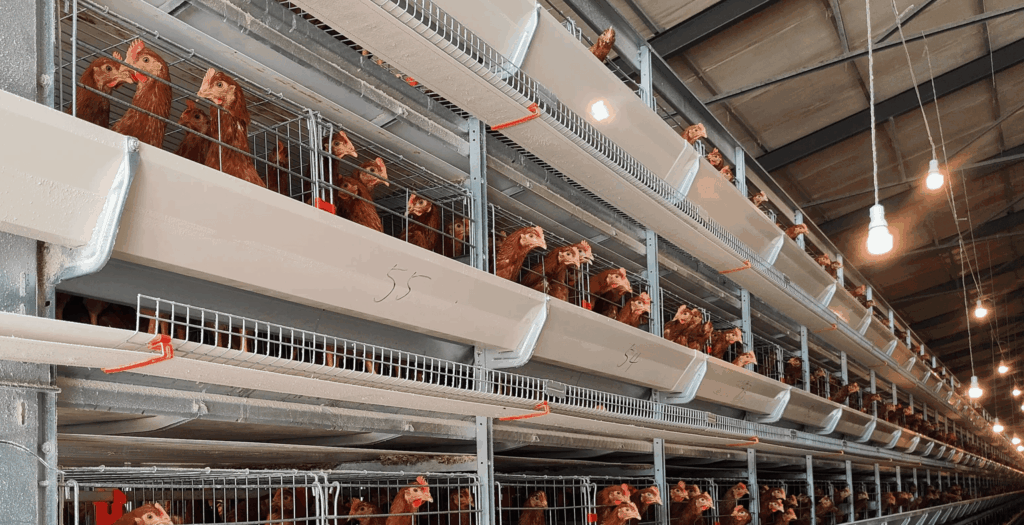
- Fully‑automatic chicken cages: Integrated with automatic feeding, drinking, manure cleaning and egg‑collecting devices. This segment occupies the largest market share, mainly welcomed by large‑size commercial farms in the Middle East, Southeast Asia and Latin America. It greatly cuts manual labor and improves breeding consistency.
- Semi‑automatic chicken cages: Partial mechanical operation with manual auxiliary work. It enjoys huge popularity in Africa and small‑to‑medium farms with limited budgets, balancing performance and investment cost.
- Manual chicken cages: Low initial cost, fit for small family‑run poultry projects.
Main driving forces for market growth:
- Shortage of farm labor pushes farms to upgrade automated cage systems to reduce manpower input.
- Higher biosecurity awareness. Well‑structured chicken cages help isolate flocks, lower disease spread risks and cut antibiotic usage.
- Urban population growth fuels stable demand for affordable eggs, stimulating investment in commercial laying‑hen farms.Major industry challenges:
Major industry challenges:
- Raw‑material price fluctuation of steel and galvanized materials brings pressure on manufacturers’ profit margins.
- Evolving animal‑welfare regulations. Some regions enforce stricter space standards for hens, requiring cage manufacturers to adjust product structures continuously.
- Many small‑scale end‑users lack professional installation and after‑sales support resources, which affects the actual service life of cage equipment.
Latest Industry News & Updates (2026)
News 1: IoT‑smart poultry cage solutions gain wider market trial application
In 2026, more cage manufacturers add IoT sensor modules to chicken cage systems. Sensors can monitor water flow, feed consumption, barn temperature and humidity in real‑time. Once abnormal situations appear, the system sends remote alarms for farm managers. This smart hardware is no longer exclusive to super‑large farms; mid‑range automatic cage products start to reserve interfaces for intelligent upgrading.
News 2: Export demand for Chinese‑made poultry cage equipment keeps increasing Chinese poultry cage suppliers keep expanding overseas markets. Hot‑dip galvanized A‑type, H‑type layer cages and matched supporting equipment see rising export volume to Middle East, Africa and South‑east Asia. Buyers value the cost‑performance ratio as well as complete supporting services including drawing design, installation guidance and spare‑part supply.
News 3: Welfare‑optimized cage designs become a new product competition point Against the background of global animal‑welfare attention, more suppliers launch enriched cage products. These designs add perches, nesting boxes and scratching areas inside cages, satisfying part of hens’ natural behaviors while keeping the advantages of high‑density raising. Such products are gaining more orders from European and American customers with high‑standard requirements.
News 4: Old‑farm reconstruction drives equipment replacement demand Lots of old poultry farms built 8‑12 years ago enter the equipment renewal cycle. Many farms discard rusted low‑efficiency cages and choose modern multi‑tier automatic systems. It creates a huge stock‑market demand besides new‑farm construction projects.
Key Tips for Global Buyers
When sourcing chicken cages in 2026, buyers should not only compare unit prices, but also focus on these practical points:
- Anti‑corrosion craftsmanship: Hot‑dip galvanized materials are preferred for long service life, especially for coastal or high‑humidity regions.
- Automation matching: Confirm whether feeding, manure‑cleaning and egg‑picking accessories match cage models; avoid compatibility problems.
- Local regulation compliance: Check certification requirements in target areas such as CE, welfare‑related standards.
- After‑sales service: Confirm drawing supply, installation guidance and spare‑part delivery cycle from suppliers.
Closing Thoughts
The global chicken‑cage industry is transforming from simple metal‑cage manufacturing toward complete poultry‑raising solution supply. Automation, intelligence and animal‑welfare optimization will be three core directions for future product iteration. Whether you run a newly‑built farm or plan to renovate existing facilities, choosing suitable cage systems matching your local climate, budget and regulatory rules will determine your farm’s long‑term profitability.
Frequently Asked Questions
What is an A-type chicken cage used for?
An A-type chicken cage is primarily used for commercial egg production and broiler breeding. Its tiered, A-frame design maximizes bird density, simplifies manure removal, and improves egg cleanliness — making it the preferred housing system for medium to large-scale poultry farms.
What is the difference between A-type and H-type chicken cages?
A-type cages have a sloping, pyramid-like profile with 2–4 tiers, while H-type (flat-deck) cages have multiple horizontal tiers stacked vertically. A-type offers better manure belt separation and ventilation, whereas H-type maximizes density in very tall buildings. A-type is more common for small to medium farms due to simpler installation and lower cost.
How many birds can an A-type cage hold?
Capacity depends on cage dimensions and tier count. A standard 2-tier A-type cage with 10 cells per tier holds 60–80 birds (3–4 birds per cell). A 3-tier system with the same configuration holds 90–120 birds. Custom sizes are available for higher capacities.
What material is best for A-type chicken cages?
Hot-dip galvanized steel (Q235) with a minimum 80 µm zinc coating is the most cost-effective choice for most farms. For coastal areas or high-humidity environments, 304 stainless steel offers superior corrosion resistance and longevity. Always check wire gauge — 2.5–3.0 mm is recommended for durability.
How do I maintain an A-type chicken cage system?
Regular maintenance includes daily manure belt cleaning, weekly inspection of feeding and drinking lines, monthly check of fasteners and wire mesh for rust or damage, and quarterly lubrication of moving parts. Galvanized surfaces should be inspected annually; touch-up coating is recommended if scratches expose bare steel.
Need a customized A-type chicken cage for your farm? Request a quote or speak with our poultry equipment specialists today.