How to Choose the Perfect Chicken Cage for Your Backyard Flock
Raising backyard chickens has become a trendy and fulfilling hobby for countless families worldwide. Fresh homegrown eggs, natural poultry farming, and the joy of raising small flocks make backyard chicken keeping increasingly popular among beginners and seasoned farmers alike. Meanwhile, a high-quality chicken cage is the core guarantee for healthy chickens and stable egg production. If you are looking for a practical, durable, and safe chicken cage, this complete buying guide will help you make the right choice.
1. Choose the Right Cage Size According to Your Flock Scale
-
Size is the primary factor when buying a chicken cage. Overcrowded living space will cause chicken stress, feather pecking, disease infection and reduced egg output.
-
As the industry standard, each ordinary laying hen needs 3–4 square feet of indoor living space and 8–10 square feet of outdoor activity area. Small bantam chickens only need about 2 square feet of indoor space. We suggest choosing a slightly larger coop than your current needs, reserving enough space for future flock expansion.
2. Prioritize Predator-Proof & Sturdy Structure
-
Predator invasion is the biggest threat to backyard chickens. Raccoons, foxes, snakes, rats and stray animals often attack chickens and steal eggs at night. Therefore, predator-proof design is essential for a qualified chicken cage.
-
A reliable chicken cage adopts thickened solid wood and heavy-duty galvanized wire mesh with dense gaps, which can effectively block all kinds of small and large predators. All doors are equipped with firm safety latches to prevent intelligent predators from prying open the doors. The elevated base design avoids digging predators and keeps the cage dry and clean at all times.
3. All-Weather Resistant Design for Year-Round Use
-
Chickens are fragile to extreme weather, so your chicken cage must adapt to rain, sun, wind and snow.
-
Our upgraded chicken cages feature waterproof asphalt roofs and waterproof wall panels, which prevent rain leakage in rainy seasons. The multi-sided breathable ventilation windows ensure smooth air circulation, effectively relieve overheating in summer and remove peculiar smells. In winter, the enclosed rest area can resist cold wind and keep chickens warm, avoiding frostbite. The high-quality weatherproof material ensures long service life without cracking, fading or rotting.
4. Humanized Easy-Clean & Easy-Maintenance Design
-
Daily cleaning is key to chicken health, so a user-friendly structure is extremely important for a backyard chicken cage.
-
All our chicken cages are equipped with pull-out removable droppings trays. You can directly pull out the tray to clean up manure, without disassembling the entire cage, greatly saving your cleaning time. The smooth surface is waterproof and dirt-resistant, easy to wipe and disinfect. In addition, the large opening nesting box with flip-top lid allows easy daily egg collection, bringing great convenience for daily feeding and management.
5. Comfortable Roosting & Nesting Space for Better Egg Production
- Professional chicken cages fully conform to the living habits of chickens. The built-in smooth solid wood roost bars allow chickens to rest off the ground, avoiding moisture and bacteria.
-
The independent dark nesting box provides a quiet and private spawning environment for laying hens. Hens prefer dark and enclosed spaces to lay eggs, and our reasonable nesting box design can effectively reduce egg breakage and encourage continuous and stable egg production.
For customized chicken cage solutions — including tailored dimensions, material grades, and automation accessories — please contact our technical team for a free farm layout consultation.
Frequently Asked Questions
What is an A-type chicken cage used for?
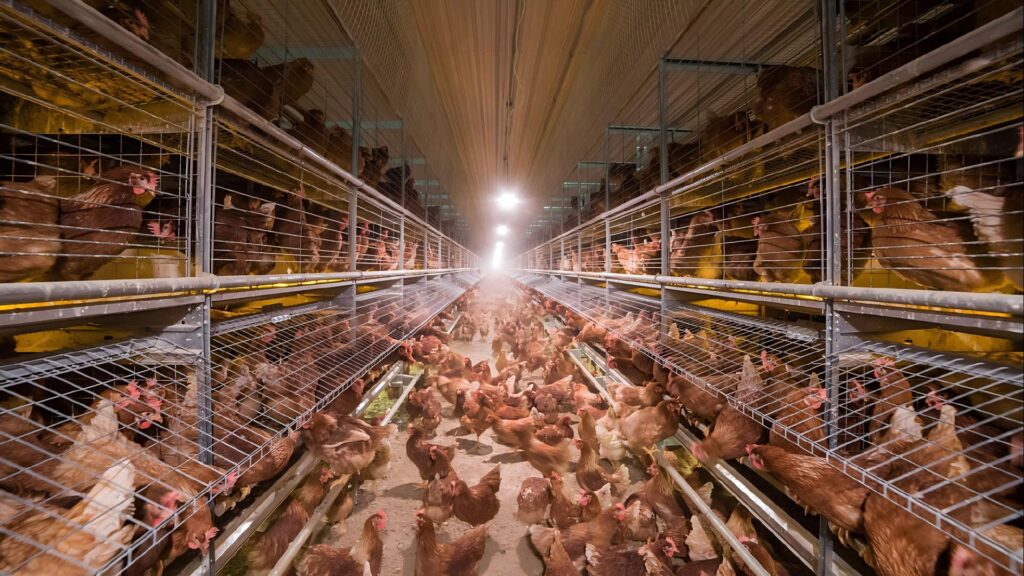
An A-type chicken cage is primarily used for commercial egg production and broiler breeding. Its tiered, A-frame design maximizes bird density, simplifies manure removal, and improves egg cleanliness — making it the preferred housing system for medium to large-scale poultry farms.
What is the difference between A-type and H-type chicken cages?
A-type cages have a sloping, pyramid-like profile with 2–4 tiers, while H-type (flat-deck) cages have multiple horizontal tiers stacked vertically. A-type offers better manure belt separation and ventilation, whereas H-type maximizes density in very tall buildings. A-type is more common for small to medium farms due to simpler installation and lower cost.
How many birds can an A-type cage hold?
Capacity depends on cage dimensions and tier count. A standard 2-tier A-type cage with 10 cells per tier holds 60–80 birds (3–4 birds per cell). A 3-tier system with the same configuration holds 90–120 birds. Custom sizes are available for higher capacities.
What material is best for A-type chicken cages?
Hot-dip galvanized steel (Q235) with a minimum 80 µm zinc coating is the most cost-effective choice for most farms. For coastal areas or high-humidity environments, 304 stainless steel offers superior corrosion resistance and longevity. Always check wire gauge — 2.5–3.0 mm is recommended for durability.
How do I maintain an A-type chicken cage system?
Regular maintenance includes daily manure belt cleaning, weekly inspection of feeding and drinking lines, monthly check of fasteners and wire mesh for rust or damage, and quarterly lubrication of moving parts. Galvanized surfaces should be inspected annually; touch-up coating is recommended if scratches expose bare steel.
Need a customized A-type chicken cage for your farm? Request a quote or speak with our poultry equipment specialists today.