A-Type Chicken Cage Guide for Commercial Poultry Farming
An A-type chicken cage, also known as an A-frame layer cage or battery cage, is a tiered poultry housing system designed for commercial egg production and broiler breeding. Its stacked, slope-sided configuration maximizes bird density while maintaining efficient manure removal and ventilation. For poultry farmers, choosing the right cage system directly impacts flock health, egg output, and operational cost. This comprehensive guide covers the construction, applications, key advantages, and selection criteria for A-type chicken cages, helping you make an informed investment for your farm.
What Is an A-Type Chicken Cage?
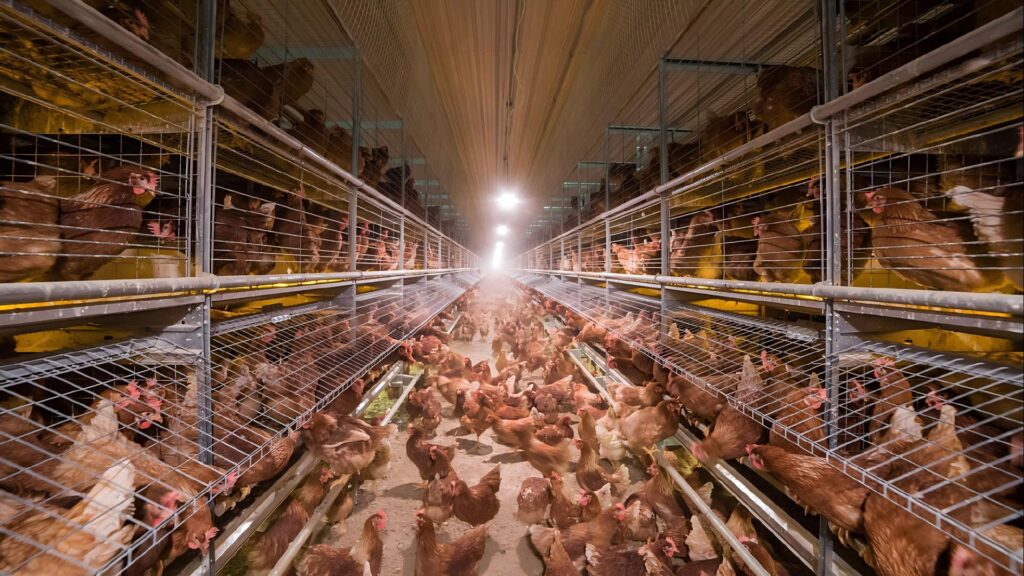
An A-type chicken cage is a multi-tier poultry housing unit where cages are arranged in an A-shaped profile—typically with two or three levels sloping outward from a central apex. This design allows each tier to have its own manure belt or dropping pan, preventing waste from contaminating lower levels. The structure is usually made of galvanized steel or stainless steel wire mesh, ensuring corrosion resistance and long service life in humid poultry environments.
Key Components of A-Type Chicken Cages
- Cage frame – heavy-duty galvanized steel or stainless steel angles.
- Wire mesh flooring – typically 2.0–3.0 mm wire diameter with 20–25 mm openings.
- Manure belts – PVC or polypropylene belts running under each tier.
- Feeding troughs – galvanized steel or plastic troughs along the front.
- Drinking nipples – stainless steel or brass nipples with drip cups.
- Egg collection trays – sloped trays that guide eggs to the front.
Common Specifications
- Tiers: 2–4 tiers (typical height 1.8–2.4 m)
- Cage dimensions: 600×500×450 mm (single cell, adjustable)
- Bird capacity: 3–5 birds per cell; 90–120 birds per set
- Wire gauge: 2.0–3.0 mm (Q235 or stainless steel)
- Surface treatment: hot-dip galvanized or electro-galvanized
- Manure belt width: 600–800 mm
Applications of A-Type Chicken Cages in Poultry Farming
Commercial Egg Production
The A-type cage is the industry standard for layer hen operations. Its sloping floor allows eggs to roll gently onto collection trays, reducing cracks and contamination. With automated feeding and watering systems, a single farmer can manage 10,000–20,000 birds efficiently. The design also facilitates easy inspection and egg collection, making it ideal for medium to large-scale commercial farms.
Broiler Breeding
While broilers are traditionally raised on litter floors, A-type cages are increasingly adopted for broiler breeders and grow-out operations where space is limited. The tiered system increases bird density per square meter, improves biosecurity by isolating flocks, and simplifies cleaning between cycles. Some models feature adjustable floor slopes to accommodate different bird weights.
Advantages of A-Type Chicken Cages
- High bird density – houses up to 3× more birds per square meter compared to floor systems.
- Superior hygiene – manure belts remove waste daily, reducing ammonia and disease risk.
- Cleaner eggs – eggs roll away from litter and manure, lowering bacterial contamination.
- Efficient feed conversion – birds waste less feed, improving FCR by 5–10%.
- Easier management – centralized feeding, watering, and egg collection reduce labor.
- Durable construction – galvanized steel withstands corrosion and lasts 15–20 years.
- Ventilation efficiency – open mesh sides allow natural airflow, reducing heat stress.
How to Choose the Right A-Type Chicken Cage
Material Quality
Choose cages made from Q235 galvanized steel with a hot-dip galvanized coating (minimum 80 µm thickness) or 304 stainless steel for coastal or high-humidity regions. Check wire diameter — 2.5–3.0 mm is recommended for layer cages to prevent sagging under bird weight. Inferior materials with thin coatings will rust within 2–3 years, leading to frequent replacements.
Cage Size and Dimensions
Standard cell dimensions are 600 mm (width) × 500 mm (depth) × 450 mm (height), but custom sizes are available. For laying hens, each bird requires approximately 450–550 cm² of floor space. Ensure the cage depth allows birds to fully stretch their wings and access feed and water comfortably. Larger cages (e.g., 600×650 mm) are better for heavier breeds.
Capacity and Stocking Density
Stocking density directly affects bird welfare and productivity. For layers, the recommended density is 3–4 birds per cell (450–550 cm²/bird). For broilers, 2–3 birds per cell with additional floor space. Overcrowding leads to stress, feather pecking, and reduced egg production. Always choose a cage model that allows future expansion if needed.
For customized A-type chicken cage solutions — including tailored dimensions, material grades, and automation accessories — please contact our technical team for a free farm layout consultation.
Frequently Asked Questions
What is an A-type chicken cage used for?
An A-type chicken cage is primarily used for commercial egg production and broiler breeding. Its tiered, A-frame design maximizes bird density, simplifies manure removal, and improves egg cleanliness — making it the preferred housing system for medium to large-scale poultry farms.
What is the difference between A-type and H-type chicken cages?
A-type cages have a sloping, pyramid-like profile with 2–4 tiers, while H-type (flat-deck) cages have multiple horizontal tiers stacked vertically. A-type offers better manure belt separation and ventilation, whereas H-type maximizes density in very tall buildings. A-type is more common for small to medium farms due to simpler installation and lower cost.
How many birds can an A-type cage hold?
Capacity depends on cage dimensions and tier count. A standard 2-tier A-type cage with 10 cells per tier holds 60–80 birds (3–4 birds per cell). A 3-tier system with the same configuration holds 90–120 birds. Custom sizes are available for higher capacities.
What material is best for A-type chicken cages?
Hot-dip galvanized steel (Q235) with a minimum 80 µm zinc coating is the most cost-effective choice for most farms. For coastal areas or high-humidity environments, 304 stainless steel offers superior corrosion resistance and longevity. Always check wire gauge — 2.5–3.0 mm is recommended for durability.
How do I maintain an A-type chicken cage system?
Regular maintenance includes daily manure belt cleaning, weekly inspection of feeding and drinking lines, monthly check of fasteners and wire mesh for rust or damage, and quarterly lubrication of moving parts. Galvanized surfaces should be inspected annually; touch-up coating is recommended if scratches expose bare steel.
Need a customized A-type chicken cage for your farm? Request a quote or speak with our poultry equipment specialists today.