Broiler vs Layer Chicken Cage: How to Pick the Right One for Your Farm
Automatic | Durable | broiler | Easy to Install | Layer chicken
Choosing suitable poultry cages is fundamental to farm productivity. Many new poultry farmers get confused between broiler chicken cage and layer chicken cage. Although they look similar at first glance, they are designed for totally different growth goals: one for meat‑type chicken rapid weight gain, the other for stable long‑term egg production. Using the wrong cage type will lead to low growth performance, high mortality, damaged equipment and unnecessary financial losses. This article compares core differences between broiler and layer chicken cage from structure, dimension, accessories, material requirements and operating cost. Practical selection tips and FAQs are included to help you make correct purchasing decisions for your farm project.
✅ Core Design Difference: Production Goal Determines Cage Structure
Layer Chicken Cage Design Focus
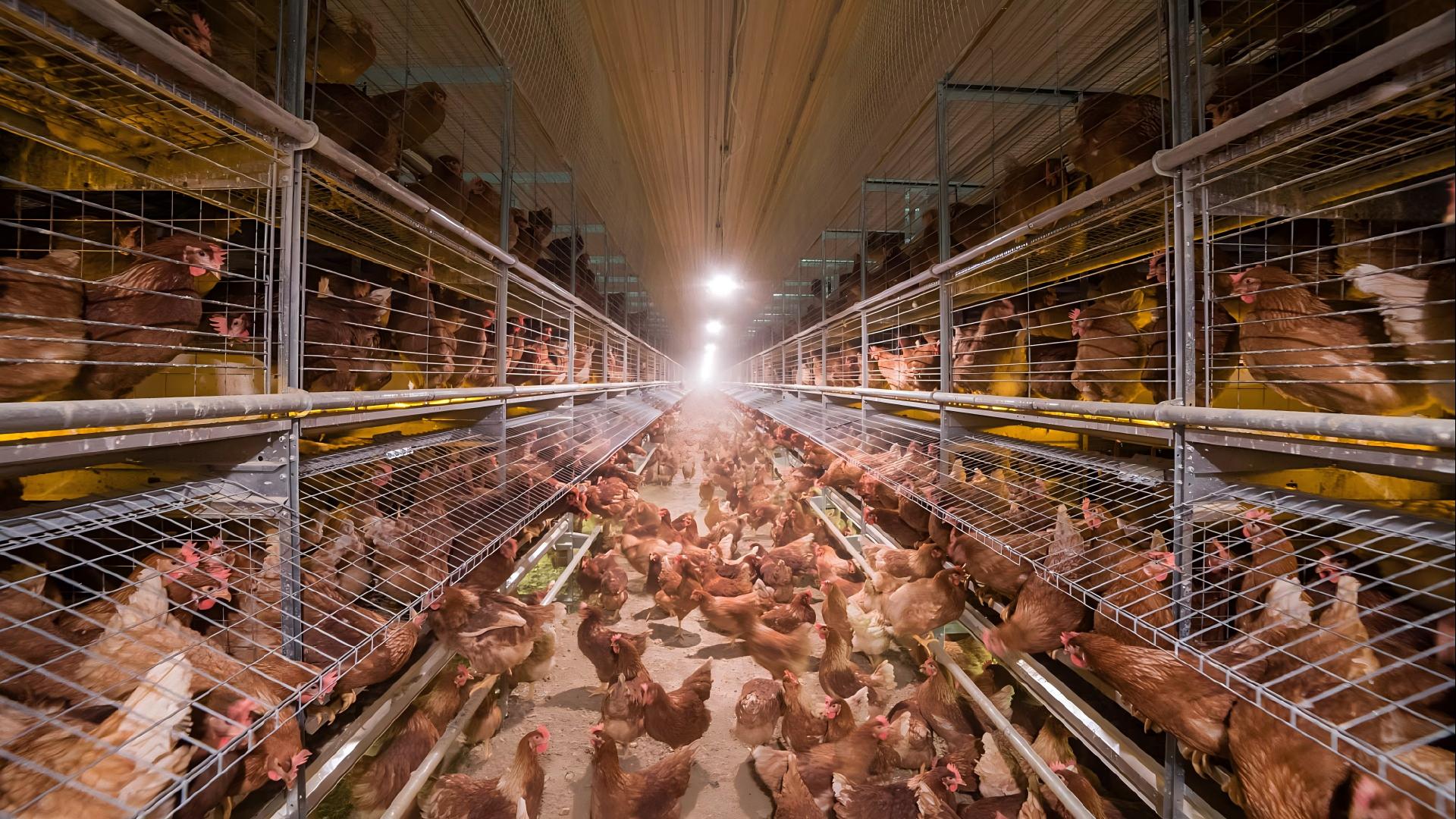
Layer hens live in cages for 12‑18 months for continuous egg laying. Therefore, layer chicken cage prioritizes stable egg collection, reasonable activity space and long‑term anti‑corrosion performance.
Key design features:
‑ Built‑in sloped egg roll‑out tray. Eggs automatically roll away from hens to prevent pecking and egg damage.
‑ Divided independent single compartments, control reasonable stocking density for steady egg output.
‑ Matching feeding trough and nipple drinker installed on cage front side.
‑ Bottom mesh keeps certain slope for egg rolling.Broiler Chicken Cage Design Focus
Broilers reach market weight within only 5‑7 weeks. The design focuses on weight gain, easy manure removal, low stress and convenient chicken catching at slaughter time.
Key design features:
‑ Larger single compartment area for meat chicken free movement.
‑ Flat bottom mesh instead of sloped egg slide; no egg‑collecting structure.
‑ Higher cage door for fast loading and unloading broilers.
‑ Emphasis on good ventilation and quick manure dropping to reduce leg disease and breast blisters.
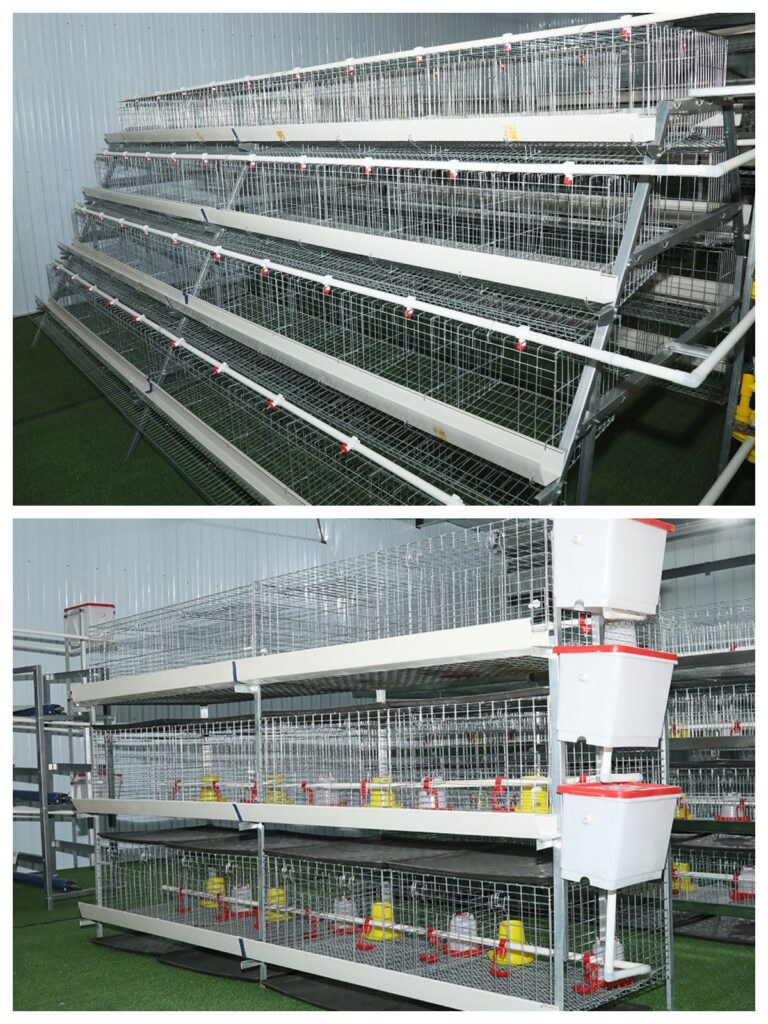
💡 Key Parameter Comparison Table for Broiler and Layer Chicken Cage
| Parameters | Layer Chicken Cage | Broiler Chicken Cage |
|---|---|---|
| Main purpose | Commercial egg production | Meat broiler raising |
| Raising cycle | 12‑18 months | 5‑7 weeks |
| Cage bottom | Sloped mesh for egg rolling | Flat leak‑manure mesh |
| Core accessory | Egg‑rolling slide | Large‑opening access door |
| Key point | Per‑hen laying area | Space for weight gaining |
| Major risk to avoid | Egg pecking, broken eggs | Leg injury, high mortality before sale |
| Surface treatment | Hot‑dip galvanized | Cold‑dip galvanized |
🧰 Supporting Accessories Difference
Accessories for Layer Chicken Cage
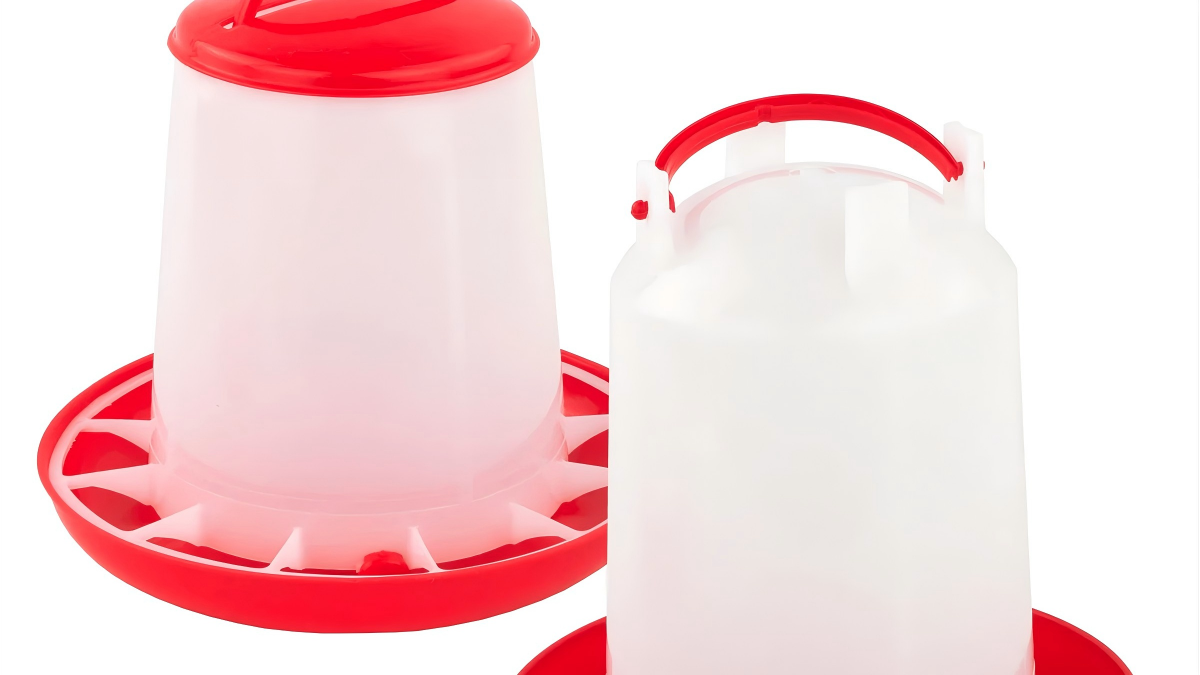
- ‑ Galvanized feeding trough for layer hen daily ration
‑ Nipple drinking system
‑ Egg‑rolling slide plate (non‑negotiable core part)
‑ Manure‑leaking bottom mesh
‑ Multi‑tier support stand Accessories for Broiler Chicken Cage
- ‑ Wide feeding trough to meet big feed intake of fast‑growing broilers
‑ High‑flow nipple drinkers for large water consumption
‑ Large swing‑open cage doors for quick chicken catching
‑ Reinforced bottom mesh to support heavy broiler weight
‑ Manure conveyor belt for frequent manure cleaning
🥚 How to Select Between Broiler Cage and Layer Cage
Confirm your farming objective
- ‑ If your target is egg output: select layer chicken cage. Never use broiler cage for laying hens, without egg‑slope design eggs will be trampled or pecked.
‑ If you raise chicken for meat market: select broiler chicken cage. Layer cages are not suitable for broiler weight‑growing and catching operation. Calculate required stocking space
- Follow industry‑recognized space standards:
‑ Laying hen: minimum 450 cm² usable area per bird
‑ Finishing broiler: allocate enough space according to final market weight; heavier broilers need larger area to avoid crowding stress. Match your farm automation level
- ‑ Semi‑manual small farm: Both A‑type layer cage and standard broiler cage can work with manual feeding & manure cleaning.
‑ Large‑scale farm: Choose full‑set automatic configuration, including automatic feeding, drinking and manure removal systems. Evaluate long‑term cost
- ‑ Layer cages are long‑cycle equipment; focus on anti‑corrosion and 10+‑year service performance.
‑ Broiler cages go through frequent catching impact. Pay attention to bottom‑mesh strength and anti‑deformation performance. Check customization possibility
- Trusted manufacturers adjust compartment size, tiers, door size and accessories according to your poultry‑house dimension and breeding plan.
FAQ
Q1: Can I use broiler chicken cage to raise laying hens?
A: Not recommended. Broiler cages adopt flat bottom mesh without egg‑rolling slope. Eggs stay inside the cage and are easily trampled, broken or pecked by hens.
Q2: Can layer chicken cage be used for raising meat broilers?
A: Layer cage small compartments and narrow doors are not fit for fast‑growing heavy broilers. It is inconvenient for chicken catching and will increase injury rate.
Q3: What surface treatment should I choose for poultry cages?
A: Hot‑dip galvanizing is the preferred solution for commercial farms, providing good anti‑corrosion in high‑humidity poultry‑house environment.
Q4: Can I customize cage compartment size for my project?
A: Yes. Professional manufacturers support customized dimensions, tiers and accessory combinations for layer and broiler cages.
Q5: Which cage needs stronger bottom mesh, layer cage or broiler cage?
A: Broiler cage. Market‑age meat chickens have heavy body weight, so bottom mesh needs thicker wire to prevent deformation and leg damage.
Distinguishing broiler vs layer chicken cage is the first critical step for poultry‑farm equipment procurement. Clarify your breeding goal first — egg production or meat production — then confirm space standard, material and supporting accessories. If you are not sure which model suits your project, share your farm scale, poultry‑house size and breeding type with our sales team. We can provide specification suggestion and wholesale quotation for your reference.